Even in the city, nature held me. An urban forest at the end of a street. The Public Gardens. A patch of sky between buildings. The persistence of weeds pushing through pavement. These were not small things. They were evidence that life continues, that green things return, that living systems find a way through concrete and damage. That same sensitivity—to light, to texture, to the way living things bear their own history—moved into my hands. I began to understand materials the way I had learned to read the natural world: slowly, attentively, with great respect for what they could hold and what they could tell.

  Refugia is a term used to describe a geographic region that has remained unaltered by climatic change affecting surrounding regions and that therefore forms a haven for flora and fauna left behind. I am using this term to refer to a personal refuge found in the land, the flora and fauna, the underground, imagination and wonder, a safe space created through the practice of making Art and for the Artist’s voice.
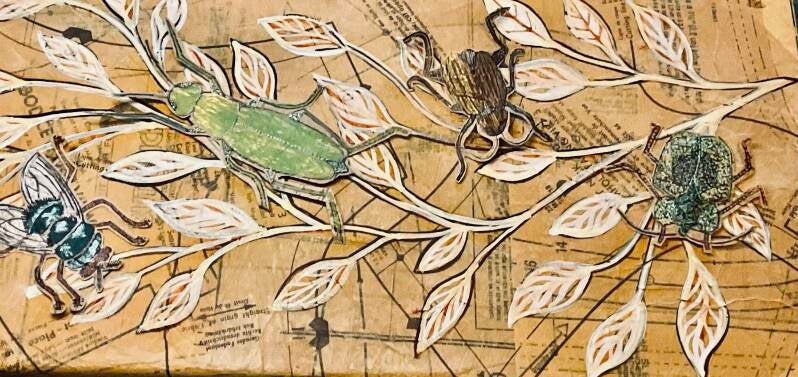
I claim Refugia for another kind of endurance - the  persistence of life that has learned, like the natural world, to find a way through.

  I grew up in Halifax, in a home where nothing was ever quite what it seemed. My father was the person who taught me to read the natural world—to find solace in forests, in shorelines, in the quiet of wild places. He could name every bird by its song. He held my hand on walks. He loved me. And there was another version of him that I could not explain or predict, a darkness that gathered without warning and filled every room, emptied it, and filled it again. As a child you learn to read the air, to watch for the shift before the storm, to make yourself small and still. You love the person who is hurting you. You wait for the version of them you recognize to return. That confusion—the cycling between tenderness and terror—does not leave you easily. It becomes the weather you learn to live inside.

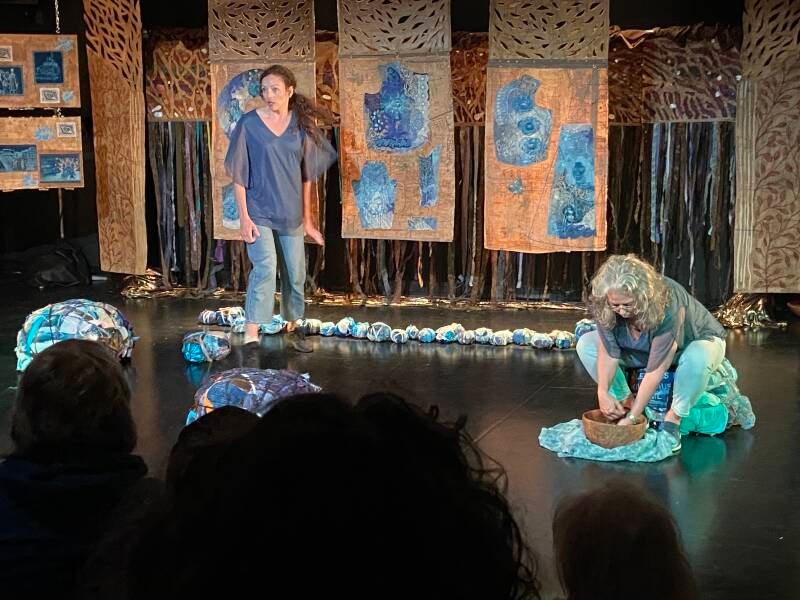
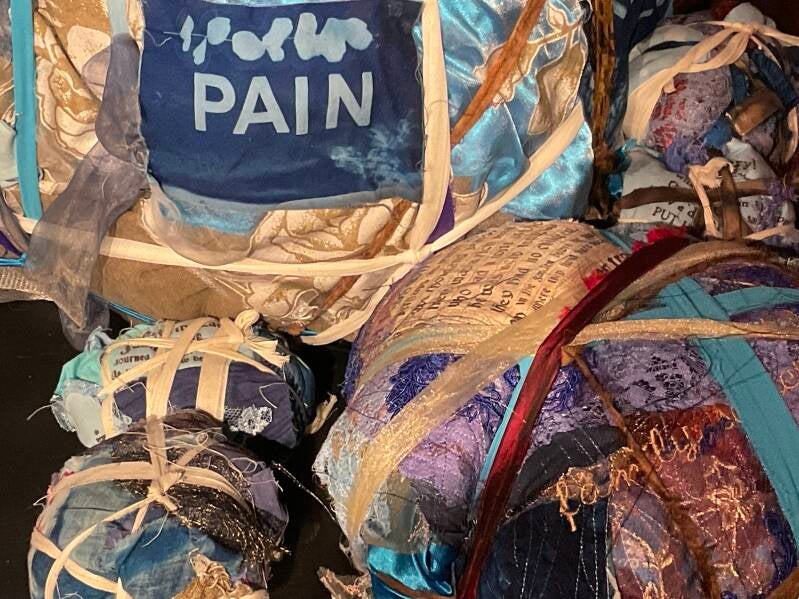
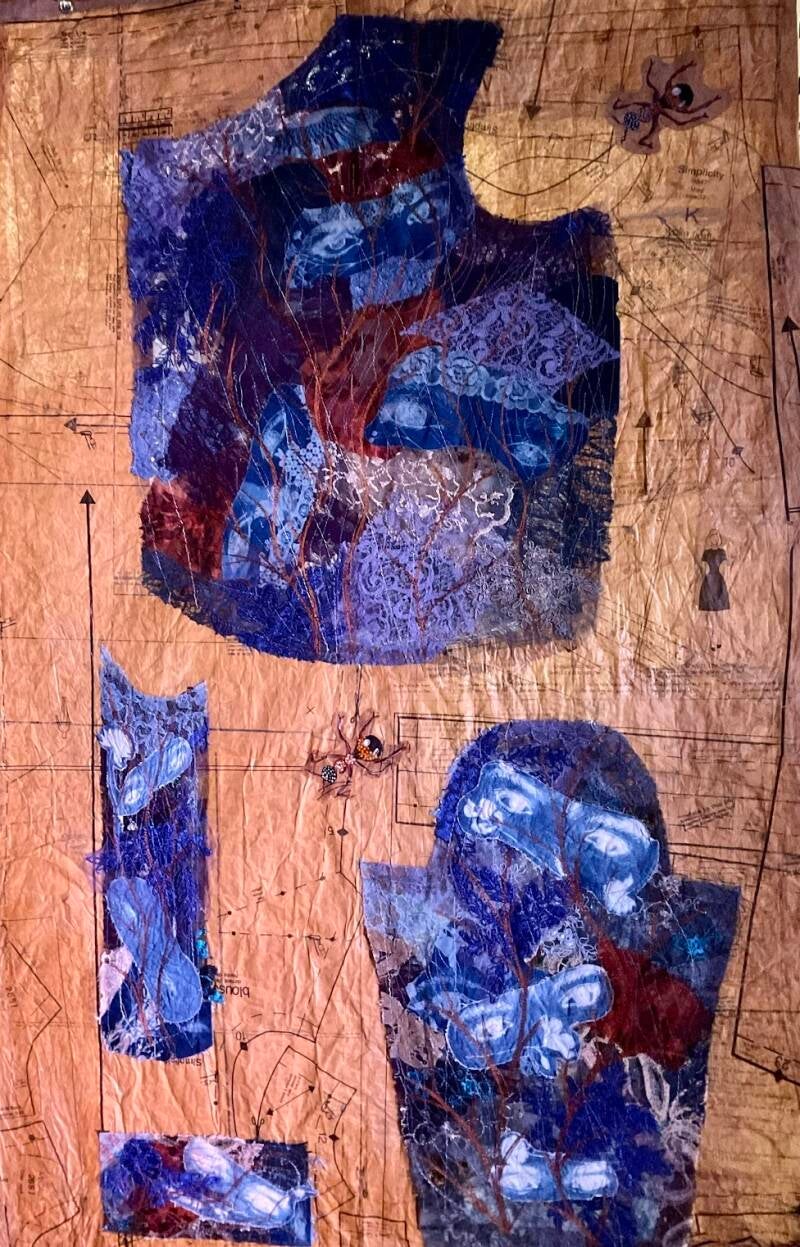
These pieces are made from dressmaking pattern paper—tissue-thin, ghosted with the lines of bodies—layered with cyanotypes, blueprints printed in light. A blueprint imagines what could be built. I am asking what we might yet construct together.

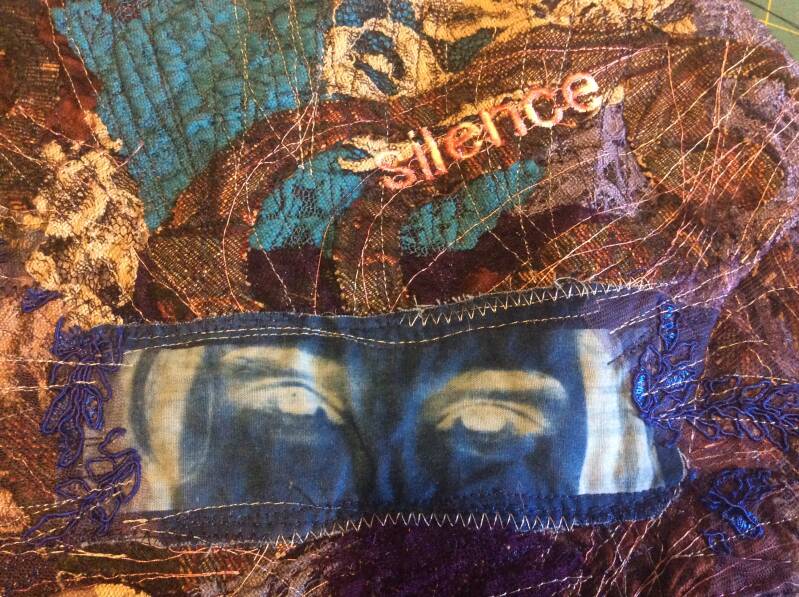
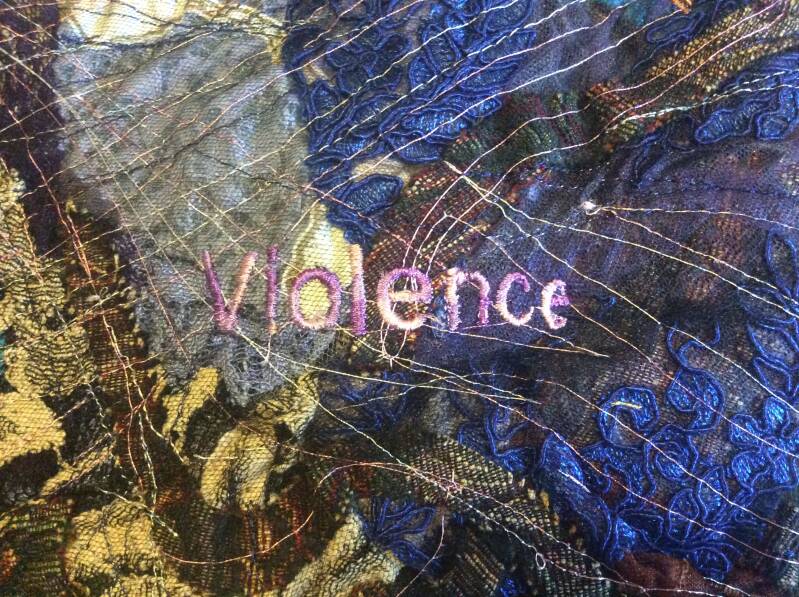
Stitched into the fabric are the eyes of women killed by intimate partners in Newfoundland and Labrador. They are present in this work. They look back at us. Violent thinking does not stay at home. I have felt its shape in classrooms and professional spaces, in the dismissal and silencing that women navigate every day. It is not only a private wound. It is a public architecture, cycling through generations, reshaping itself just enough that we keep calling it something new.

I am speaking up because we can change this. Because the generations coming deserve to inherit something different—homes where love does not have another face, institutions that do not mistake silence for peace. Each stitch in this work is an act of remembrance. Each fold, a demand for something better.